Thirty-two prompts run in my sourcing stack on a normal day. Seven to ten of them I start by hand. The rest run on a schedule while I do something else.
That is not a confession. It is the point. I have handed more of my daily work to AI than most recruiters ever will, and I am more convinced than ever that the job is safe. Not because the tools are weak. Because of what the job actually is.
In my 2018 book I described the sourcer's daily output as four things: a name, a title, a job function, and contact information. Find the person, confirm who they are, get a way to reach them.
Look at that list with today's eyes. Every item on it is something a well-built AI tool now does faster than you, at three in the morning, without complaining. Searching, listing, enriching, formatting, first drafts of outreach, sorting a pile of profiles into rough order. All of it is repetitive, all of it is rule-based, and all of it used to eat most of your week.
That is the busywork. AI is coming for it, and I say good. Nobody became a recruiter because they loved copying email addresses into a spreadsheet.
"A name, a title, a job function, and contact information."The Sourcing Method, 2018
But there's stuff none of my thirty-two prompts can do, and I built them:
-

They cannot decide what actually matters in a role, because the hiring manager's job description says one thing and the hiring manager means another. We sit in the middle and form the interpretation layer. Judgement, meaning, creativity, lateral thinking. .
-

They cannot push back and tell a hiring manager that this requisition is not fillable as written, and that this conversation needs to happen right now, not in week eleven after the pain becomes unbearable.
-

They cannot choose which twenty people out of two hundred are really worth an approach.
-

They cannot make the final call on who advances, and stand behind that decision in the debrief.
-

And they cannot handle the reply from the candidate who just said she is leaving because of her manager and does not know if she can trust yours.
Every one of those is a decision, and decisions have people who answers for them. When a hire goes wrong, nobody calls the AI. They call you, the Recruiter. That is not a tech limitation, it is the job description, and it a far better one than the four fields I wrote down in 2018.
The Recruiter is not the person who finds names. They are the person who decides. AI is the tool that clears the desk so that you can.
The fear is real but it is pointed at the wrong thing.
In July I ran a session for TSIUniversity.com members called The Skill Atrophy Reckoning. One phrase came out of it that since then I keep repeating:
"the risk is going from using AI to trusting AI"
Monster, CareerBuilder, Google and LinkedIn are tools. The "Internet" is a tool.
Tools do not take decisions away from you... until you stop checking your work.
As your ability to check your work slowly erodes, you quietly hand over the decision.
Nobody replaced you. You stepped back.
I will be straight about the other part too. Teams that use these tools well will do more with fewer hours, and some organizations will read that as fewer seats. That has been true of every tool since classified advertisements. The recruiters who stuck through each new wave of tools were not the fastest at the busywork. They were the ones the hiring managers trusted to decide. Which brings us back to the same place.
The question is not "will AI replace me." The question is how to use AI so that it keeps YOU sharp instead of making you SOFT.
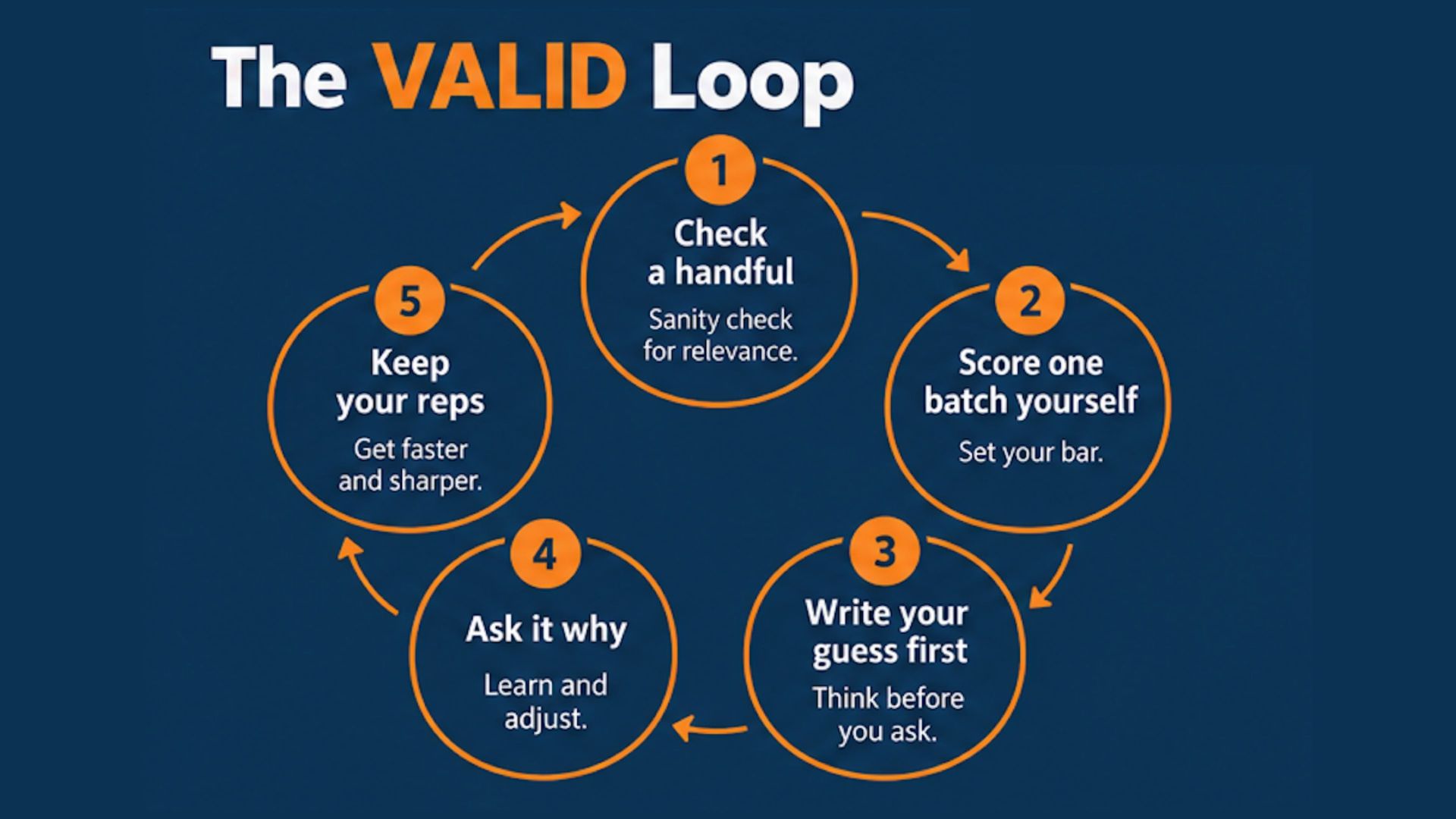
These are the habits I teach. Together they are what I call the VALID Loop, but you do not need the name to use them.
- Check a handful of leads. When AI hands you a batch, whether it is a list of profiles, a ranking, or a set of drafted messages, spot-check ten or twenty percent of them before you act. Not all of them. Enough to know whether the batch is good.
- Score one batch yourself. Once in a while, rank a set of candidates cold, without looking at what the tool said. Then compare. The overlap tells you how much to trust it on that kind of role, and the differences tell you where your judgment earns its keep.
- Write your guess first. Before you open the AI's answer, write down what you expect. If you can no longer form an expectation, that is an early warning sign, and it is easy to miss without this habit.
- Ask it why. Ask the tool why it included one person and left out another. Read the answer the way a hiring manager would. Sometimes the reasoning is good. Sometimes it is confidently wrong, and you will only know if you ask.
- Keep your reps. Pilots still log time in the simulator after the autopilot got good. Schedule manual searches, manual screens, manual outreach. Not because the tool needs you to, but because your judgment does.
And one habit on the other side, so the loop does not read as suspicion of the tools.
- Hand off one recurring task this month.A requisition intake form, an interview reminder, a Friday status report.
In my own stack a simple flow like that takes fifteen to thirty minutes to build, and it never forgets. Every hour you take back from busywork is an hour you can spend on the decisions that make you a recruiter.
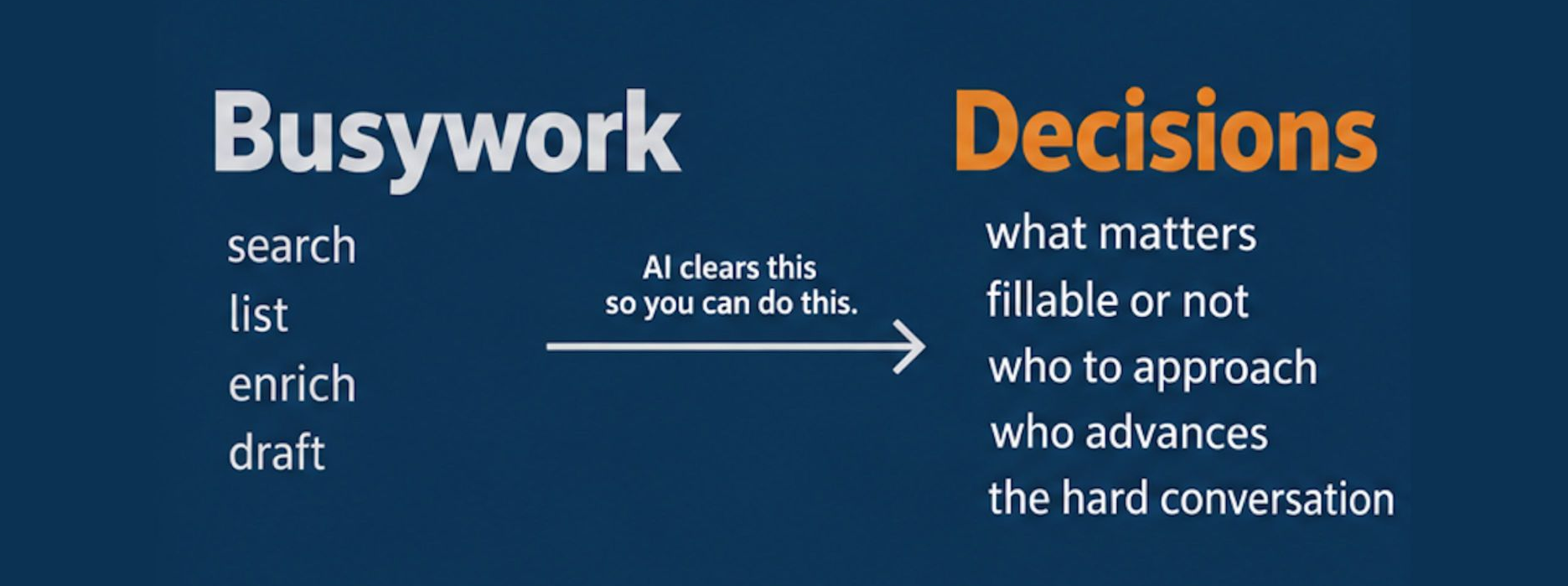
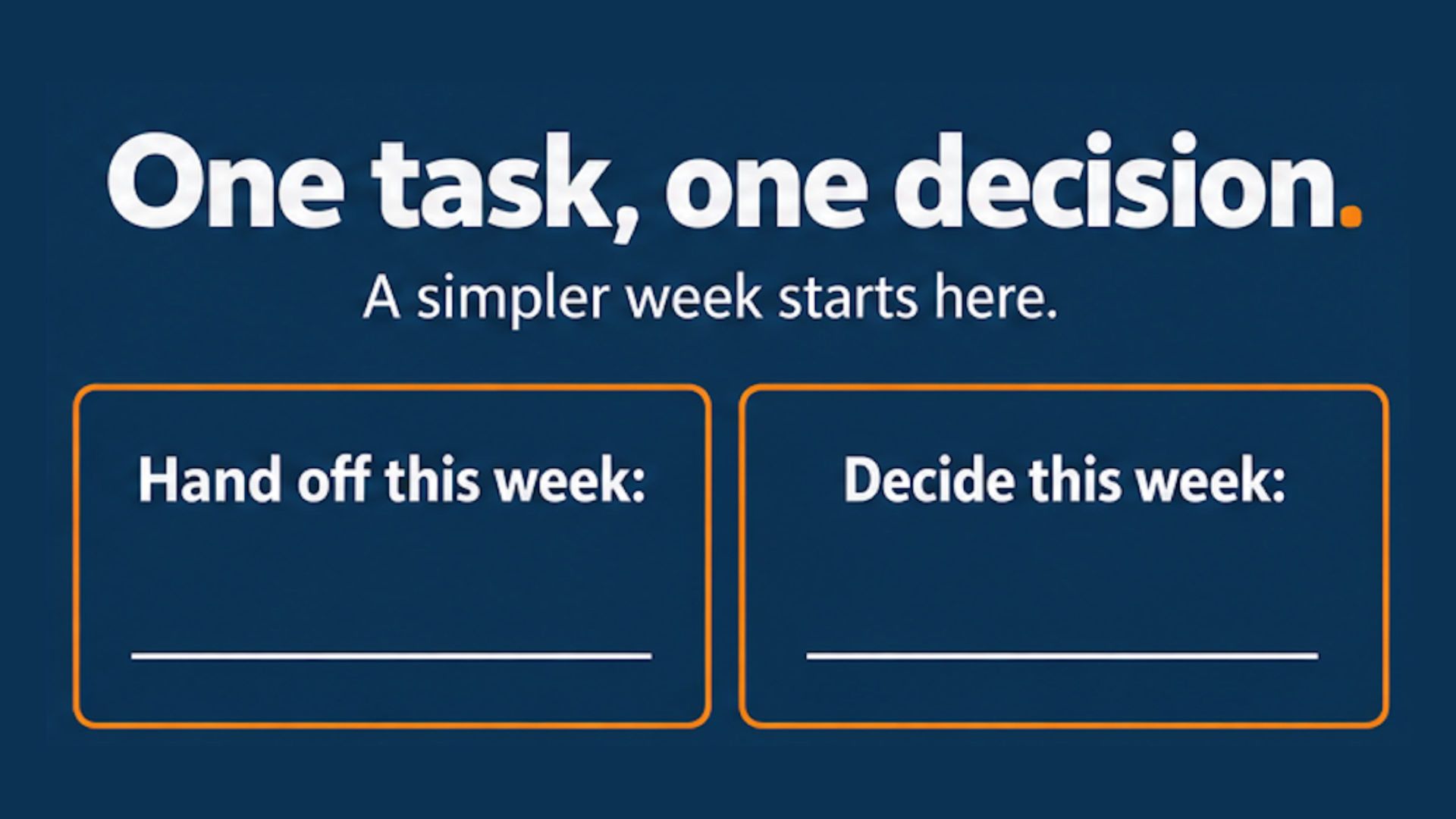
Pick one task this week to give to a tool, and one decision this week that you will make yourself and stand behind.
Do that every week and you will never wonder which side of the line you are on.
AI will not replace recruiters. It will replace the part of recruiting that was never the reason you took the job, or kept at it.
If you want to build these habits with other recruiters watching your work, that is what TSI University is for.